
I left off the last instalment with a head on the block, but no oil pump, so I couldn’t finish the assembly.
I was pretty pleased when this finally arrived from Japan. A genuine new oil pump assembly.


It came with a new, updated metal gasket

It’s interesting to note that there are some casting differences between the new and old pumps


The biggest difference to note is that the new pump doesn’t have a threaded boss on the right-hand/exhaust side. I’m not 100% sure, because mine is missing, but I think it’s used for the mounting of the AC compressor on the Alto. So if you want to retain AC, you might not be able to use the newer oil pump like this.

It’s also worth noting that the new oil pump did come with the thicker oil pump gears already fitted.
Before fitting, I transferred the studs in the front from the old pump to the new one, using the double nut method. It didn’t come with a crank seal, so this was fitted too.

It was then just a matter of pouring oil into the pump and rotating it a few times to lubricate it, and then fitting it to the engine. I was careful to make sure the crank seal lip didn’t catch on the crank when fitting.

I was lucky to find this bolt pattern someone on Minkara has helpfully drawn out

So I used that and bolted mine on

Nice to see a shiny new pump in place

Next was to thoroughly clean the oil pickup from the Alto engine and fit a new o-ring to it. Interestingly, there appeared to be no metal in it, but some chunks of carbon and more horrible orange sealant were present


This then got bolted to the oil pump, wrapping up the bottom end assembly, other than the sump

Next was to fit the new water pump. I lightly smeared the gasket in Hylomar and slid it onto the studs

Followed by the shiny new water pump


With the bottom end mostly wrapped up, I could move on to finishing the top end, too. These lifters have been sitting in cups of fresh oil for a while now, since the manuals says you have to keep them upright to stop them from bleeding down.

Before reusing them, I had to test, clean and bleed them.
I had two sets, one from the Alto engine (the dirty ones in the white bowl, and the cleaner Cappuccino ones in the clear tray). I wanted to use the Cappo ones if I could, but I wanted to make sure I had some good ones from the Alto engine if I needed to swap any out.

I started by finding a suitable Allen key that fit in the hole and could compress the ball bearing valve inside.

I used this to repeatedly compress the adjuster until all the old oil had come out. I then immersed them in a cleaning fluid (it’s meant to be kerosene, but I only had turpentine on hand) and again repeatedly compressed and expanded the adjuster, which flushed the inside of them out.
This was repeated on all the adjusters, from both engines.

The adjusters were then submerged in fresh oil, and using the Allen key, they were all actuated under the oil until the air stopped coming out

It would’ve been quicker if I had a vacuum pot and could’ve just vacuumed the air out, but eventually I managed to bleed it all out.

According to the manual, the way to test if they are good is to make sure they are bled, and then pressing the top of the lifter, make sure it is firm and does not compress by more than 0.2mm. If it does, bleed it again. If it still doesn’t pass, replace it. Thankfully, after a couple of passes of bleeding, all the Cappuccino ones passed the test, and at least six of the Alto ones passed too (my backup crew).
It was time to fit them into the head. Lining up the oil hole in the side with the oil passage in the head, I slid them into place one by one


The rocker arms could go on next. I gave them all a clean, making sure the oil holes were clear. Unfortunately, I did find that one of the rockers had a damaged cam pad. These are meant to be smooth and shiny. This one had a spot that had worn through the face and was rough.

Thankfully, the Alto engine managed to turn up a rocker arm that, although discoloured from a lack of servicing, had a good pad, and I could swap it out.

The rocker arms were then fitted

The cam boxes were next. I started by replacing the cam seals in the front

Of course, though, it wouldn’t be this project if there weren’t a setback.
Like, I’m really glad to have a donor engine, I needed it to overcome the issues the Alto engine had, but I’m starting to think maybe this donor wasn’t the deal I thought it was.
It turns out one of the cams was also damaged, with heavy wear on one of the cam lobes. Maybe related to the above damaged rocker, who knows.

Again, the Alto engine came to the rescue. Although the cams had some surface rust, I managed to polish it out, and the cam could be used in place of the Cappo one. It is a shame, though, this was the cam on the Cappuccino engine that had been modified to add a pin for a cam position sensor, so I can’t use that in future.

I slid the cams into the boxes and replaced the breather hoses between them. The best length for the hose is 27-28mm.

I then fit the new gaskets

I rotated the cams to this position as per the manual. This ensures there is no load from the cams on the rocker arms when fitted.

I then flipped the boxes over and slid them onto the dowels on the head. The bolts were torqued to 10NM in a crisscross inside-to-outside pattern, one cam box at a time.


The new breather gasket was fitted, and the breather box was bolted into place


The front cover got a quick refresh, with some new seals, before fitting


In hindsight, I should’ve got some new grommets for the cover too, but the best of the two covers were fitted and will have to do.
The cover was then bolted into place

Which meant the cam gears could go on too.

The blue block is a 3D-printed cam locking tool I found online. It was very handy for locking the cams together so I could torque the bolts up.

Once the gears were torqued up to 60NM I carefully rotated everything so the marks lined up


The new tensioner, screw and spring were fitted

And the belt was wrangled into place. After rotating the engine over a couple of times and setting the tensioner, everything was lined up bang on.

Finally, my first-ever timing belt was completed

The sump went on next. I spent ages cleaning this out and getting all the old sealant off the flange.

A bead of Threebond was squeezed on, and the pan was fitted into place. The bolts were torqued down, and that was done

I glued up a crack in the front timing cover and fit a new seal to it

Before fitting it to the engine

The dipstick and tube got a good clean and were fitted with a new o-ring. Funnily enough, whoever worked on this last decided real o-rings were for the weak, so made one from sealant instead

Whilst here, in preparation for the oil pressure/temp gauge that will be fitted, I test-fitted the temp sensor in the new drain plug

Flipping the engine right way up and spinning around, the cap on the back of the cam and the distributor mount were refitted

Looking much more like an engine now, with the breather hose installed too. Loving the wrinkle black and sanded off detail

Since I was here, the thermostat housing studs were fitted

Ready for these bits to go on

The housing that the thermostat housing mounts to had a very rusty heater pipe

I crushed it in a vice, and it pulled free from the housing


I happened to have some spare 10mm steel tube, so I cut a section off that, and using some sealant, carefully hammered it into place. To stop the hose coming off, I welded a small bead onto the end (which got ground down a bit later as I added a bit too much metal)

This housing goes here

But needs new sensors first

This one isn’t in the books, and I’m pretty sure is something to do with the AC, which is no longer fitted, so it’s pretty much just plugging a hole.

The thermostat housing got a new fan switch

And all fitted up with a new thermostat and ready to go

The under intake outlet was fitted too, with a new hose linking the two

Also, note the sensor under the outlet. These are the stock oil pressure idiot light sensor and an oil pressure sensor for the gauge, fitted to a brass adaptor

There isn’t a heck of a lot of room for the gauge wiring, but it just clears it. As you’ll see later, the sender has to be upright like this, because on either side of the adaptor are the alternator, and the starter.

Another part of the cooling system equation is the oil cooler/heat exchanger. Because this is from the Alto, not available new, and potentially had metal go through it, I cleaned it within an inch of its life. I started with an ultrasonic cleaner of degreaser, and then flushed it with petrol and brake cleaner. Nothing of concern seemed to come out of it, but at least I’m reasonably happy it’s clean.
That process did strip any remaining paint off it, though, so I finished it off and repainted it


After a couple of coats of paint had dried, I removed the tape and fitted a new seal

This was then attached to the block using the fitting

I would recommend attaching it as far anti-clockwise as you can. There is a locating lug that goes on the block, but there is some play. If you have it clocked too far clockwise, the coolant pipes will clash with the turbo later.
A temporary filter to seal it up

And that’s the block more or less done, but quickly, before I move onto the bolt-ons, I replaced the mismatched cam box and breather bolts with new matching black ones. I’m just that kinda weirdo.


Moving on, I started with the turbo and exhaust manifold.
I feel like the coolant hoses on the stock turbo weren’t original…

Since my stock VZ15 turbo was stuffed (heaps of play in the turbine), I had a Cappuccino VZ24 to replace it with. I need to swap the coolant pipe over

Surprise, the wastegate actuator mount is different and clashes with the pipes


The easiest fix, instead of bending the pipes, was to swap the actuators. I unbolted them from the turbos


Fitted the pipes with a new gasket and bolts

And fit the VZ15 actuator to the VZ24


I had two downpipes, as I bought one from Japan specifically so I could get this bracket that bolts the downpipe to the block, as mine was missing it


And whilst going through all the threaded holes with a tap to clean them up (I did a lot of this), I found something curious on the flange where the exhaust mounts to the downpipe.
Good thread

WTF, where’s my thread gone?

I believe someone has drilled out a broken bolt at some point, as the hole was smaller than it should be. I don’t know how long it’s been like this; it didn’t look fresh enough that it was done by the engine rebuilder when they stripped the Alto.
So out comes the drill and trusty tap set. It drilled OK, but didn’t love being tapped. Took a lot of time and effort to do, with lots of cutting lube.

But now it has threads again

Which means the new bolts fit (ignore the mismatch, I couldn’t get a matching pair)

Moving back to the turbo, pro tip, don’t bolt it together off the car (as it’s been mentioned, no, the orange isn’t more shitty RTV, its high temp copper exhaust sealant to help seal a slightly iffy manifold flange)

You can’t get to the manifold bolts underneath with the turbo mounted. I had to remove it and bolt the manifold on first.
Being able to rotate the engine makes life so much easier when fitting this. The turbo oil feed pipe was a real prick to get into place. They always seem so unwilling to bolt up.

And right over we go for the oil drain

I wish I had known about this before fitting the manifold and turbo. A broken off bolt in the manifold for the heat shield

Nothing another quick drill and tap can’t fix


The cambelt cover coolant crossover pipes also got fitted, but before they could, I found one of the pipes was completely blocked solid. I ended up running some wire in a drill down the pipe until it cleared it

This is why you need to clock the cooler properly; the pipes are too close to the turbo

I clocked the cooler a bit better and then ran all new coolant hoses to the various pipes

And the intake snout was fitted to the turbo (and the corrugated sleeve was moved to the other hose). It’s very snug in there


The turbo outlet pipe went on next

Now the downpipe can be bolted on with a new gasket

Bugger all room here too. I’m just glad I don’t have a cat to trap heat there anymore

This is the bracket I was missing that bolts the downpipe to the block. You can’t really see it in the photos, but part of the engine mount bracket is also bolted in there

With the exhaust done, I moved to the other side, the intake.
This absolute mess


The first job was to remove the EGR valve. I will delete this as I don’t care about emissions on this car, and it will just clog the manifold with carbon.
You can see how much carbon is blocking the passages already.


I then completely stripped the manifold down.

I wanted to test and clean the injectors while I was here. This gave me a chance to compare with the Cappuccino injector rail


I think they are close enough that with some tweaks, the Cappo one could work on an Alto, but I’m happy with the Alto one for now, so I’m using that. The main difference seems to be that on the Cappo you can replace the damper on the fuel inlet, but the Alto one is part of the rail.
I removed the Alto injectors and gave them a session in the ultrasonic cleaner, before fitting them to my new injector testing tool

The injectors press into this adaptor, which you stick on the top of a can of brake cleaner. It takes about five hands to do, so no photos of it in action, but as you push down on the blue adaptor onto the top of the brake cleaner, it pressurises the adaptor and injector. The two wires go to the tool and trigger the injector, letting pressurised fluid through it


It worked pretty well. All the Alto injectors have a decent spray (for the ancient type of single-hole injector they are). Interestingly, all the Cappo injectors were actually jammed closed, and required a bit of percussive persuasion to get them to open.

As part of the fuel rail, I removed and tested the pressure regulator to make sure it held a vacuum, which it did

Another part of the intake that got a thorough cleaning was the throttle body. This spent some time in the ultrasonic before a final clean


Cleaning the intake and attached components was hours of work; it was so grotty.
The first part to be reassembled on the manifold was the EGR blanking plate and gasket


The injectors were next. I fit new seals in the manifold

and new seals to the injectors (strangely, not shown, are the top seals, which I did fit)

The injectors were then fitted to the rail, and the lot bolted onto the manifold

A Toyota part is a direct fit for the vacuum filter on the end of the manifold, so that was fitted

I cleaned the wiring harness and fitted that next

All the vacuum hoses on top of the manifold were replaced


I have no idea what the deal with this hose that comes off the tee is. Its factory, and just dangles down the back of the manifold and is blocked with what appears to be a brake pedal clevis

All the hoses were cracking in this area, so it’s good to replace them

With a new gasket, the throttle body could be bolted back on

Which allowed me to bolt the vacuum pipes back on

On the underside, the coolant hoses were replaced

This vacuum Eff (the Tees weird cousin) connects the filter on the manifold to the MAP sensor and the fuel pressure regulator.

It’s worth noting that for whatever reason, the hose that goes to the FPR has a restrictor in it


I put a new restrictor in the new Eff when I made it

Which goes here

This whole little cluster is for the EGR and the BOV, so I have deleted it for now. The BOV will connect right to the vacuum fitting on the manifold instead of being solenoid-controlled.

Which means the manifold can be bolted to the engine again, and the coolant and wiring hooked back up

I should’ve fixed this on the bench, but oh well. The coolant temp sender for the dash had been “modified” in the past

So I cut the spade terminal off the harness, and added some new wire

Which I terminated with a new bullet connector for the sender

I also fitted the rear engine mount bracket at this point. The front one can’t go on ye,t as half of it bolts to the gearbox, which is still absent

Next was the alternator and its associated wiring. Now you get an idea of how little room there will be around the oil sensors. The starter motor still has to fit in there, on the left, too


This will be spun by a lovely new Vee belt. I love the simplicity. One belt drives one device. No AC, no PS pump, and the water pump is off the cambelt.


The final piece of the puzzle on the engine for now was the distributor. It turns out the old cap and rotor are well beyond their best, which is fine, I have new ones, but the old rotor was rusted to the shaft. It ended up snapping before letting go


I cleaned the shaft up, greased it and fit a new rotor

And with a new o-ring on the base, the distributor was slotted into place on the engine. The engagement dog can only go one way as its offset.

I’ve refitted the old cap for now, until the engine is in the car, as I don’t want to risk breaking the new cap during that work.
So that’s it. The engine is built. It’s ready to go in the car and be started. Hours of work, thousands of dollars. It better work.

Now I’m prepping the gearbox for its reunion party, and then I’ll drop the subframe and see about getting it all together and then up into the car.
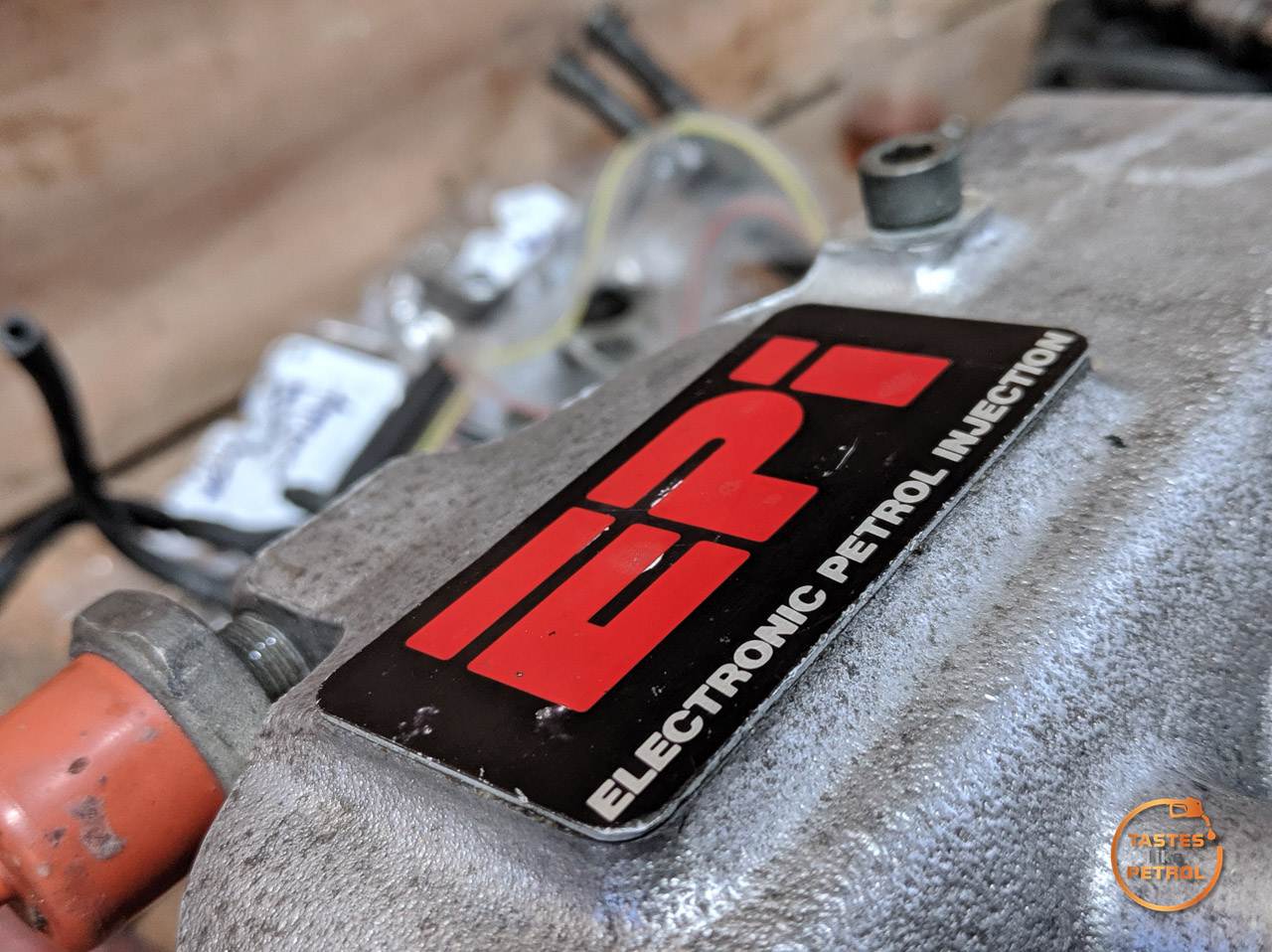
In the mean time, as a little teaser, I will leave you with this photo.

Good work and great attention to detail.
Lets hope it gives you trouble free running.